
Workshop Lesson 02
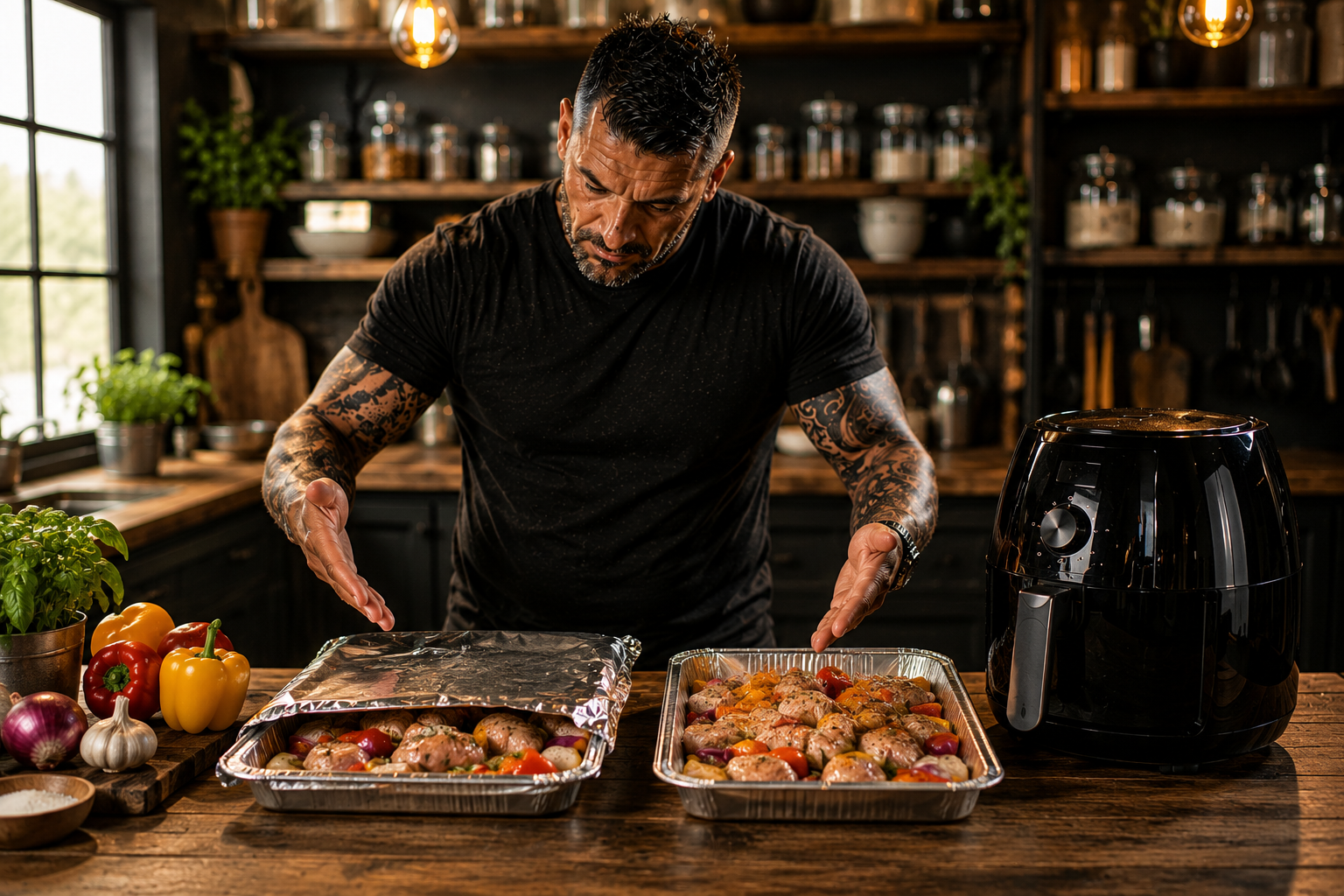
Covered vs Uncovered Cooking
An air fryer is not just a small oven. It is a high-speed hot-air machine.
That moving air is brilliant when you want crisp edges, blistered skin, bubbling cheese and proper colour. But that same airflow can also dry out fish, scorch cheese, split creamy sauces and leave the middle of a dish colder than it should be.
That is where covered and uncovered cooking comes in. This lesson is about knowing when to protect food, when to expose it, and when to do both.
The Simple Rule
Cook covered when the inside matters more than the outside.
Cook uncovered when crispness matters more than moisture.
Start covered, then finish uncovered when you want both tenderness and colour.
That one rule fixes half the mistakes people make with air fryers.
What Covering Actually Does
Covering food in an air fryer does not turn it into pressure cooking. There is no locked lid, no sealed chamber and no meaningful pressure build like you get in a pressure cooker. If your foil cover is being used properly, steam can still escape.
What you are really doing is changing the little cooking environment around the food. A loose foil cover slows direct top heat, reduces the blast of airflow hitting the surface, traps more humidity around the dish and gives the centre time to heat through before the top burns.
Think of it as humidity control, not pressure control. The air fryer is still moving heat around, but the cover takes the aggression out of it.
That matters with saucy, creamy and cheese-heavy food. Without a cover, the top can brown fast while the middle is still catching up. With a loose cover, the inside gets a fighting chance before the final colour stage.
The Steam Question
People talk about steam like it is either good or bad. It is neither. Steam is a tool.
Too much steam and food goes soft, pale and wet. Too little steam and delicate food dries out before it finishes cooking. The sweet spot depends on what you are cooking.
As a working rule, saucy dishes want some trapped steam for the first part of the cook. Crispy food wants steam escaping as fast as possible. Mixed dishes want both: covered first so the inside cooks, uncovered at the end so the top gets colour.
There is no exact universal steam ratio because every drawer size, food load and dish shape changes it. But the Crew rule is simple enough to actually use: if the dish contains sauce, cream, stock, rice, pasta, fish or thick cheese, give it protection early. If the dish needs crunch, give it airflow.
When To Cook Covered
Cook covered when the inside matters more than the crust.
- Curry pots
- Pasta bakes
- Rice dishes
- Fish parcels
- Creamy chicken trays
- Saucy meatballs
- Cottage pie-style dishes
- Cheese-heavy bakes
- Anything with cream, stock or sauce
Covered cooking gives the middle time to come up to temperature without the top turning into burnt sadness. It is especially useful when food is deep, dense or loaded into a foil tray.
When To Cook Uncovered
Cook uncovered when the surface is the whole point.
- Chips
- Wedges
- Breaded chicken
- Wings
- Pork belly
- Sausages
- Garlic bread
- Pastry tops
- Roasted vegetables
- Anything that needs crunch
Uncovered cooking gives airflow direct access to the surface. That is how you get colour, crispness and proper air-fryer texture. Air fryers crisp by moving hot air over dry surfaces. Not by magic. Not by optimism. Not because you shouted at it.
The Best Method: Covered First, Uncovered Finish
This is the pro move.
Start covered when the food needs moisture and time. Then remove the cover for the final 3–5 minutes.
That final uncovered blast gives you bubbling cheese, sticky glaze, browned tops, crisped edges, proper colour and better texture.
This works brilliantly for loaded trays, pasta pots, sticky ribs, saucy chicken, rice bakes, curry pots and anything where the top needs finishing but the middle needs protecting first.
Temperature Control
If the top browns before the middle is hot, the heat is too aggressive. Drop the temperature by 10–15°C and cover loosely.
If the dish is wet, pale and soft, uncover it, spread it wider, and let the air move.
If cheese is browning before the sauce bubbles, cover it for the first stage and uncover at the end. If breadcrumbs are going dark before the filling is hot, the fryer is bullying the top. Turn it down and give the inside time.
The air fryer is powerful, but it is not clever. You are the clever bit. Allegedly.
The Crew Uses
Lesson 02 is where the right kit starts paying for itself. Covered cooking is much easier when you have trays that fit, lids that behave and a proper way to check the middle without guessing.
The Crew Uses
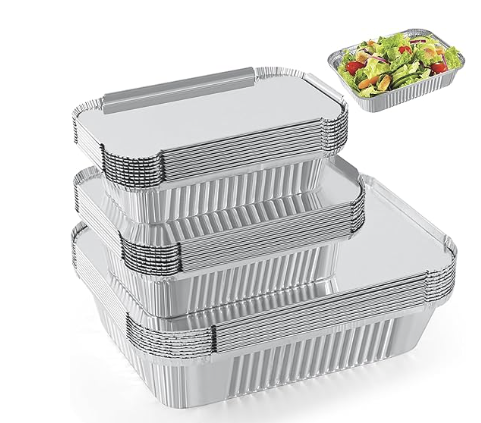
Foil Trays With Lids
Best for curry pots, pasta bakes, saucy chicken, rice trays and batch cooking. The lid gives you controlled protection early, then you can remove it for the final colour stage.
Grab Yours On Amazon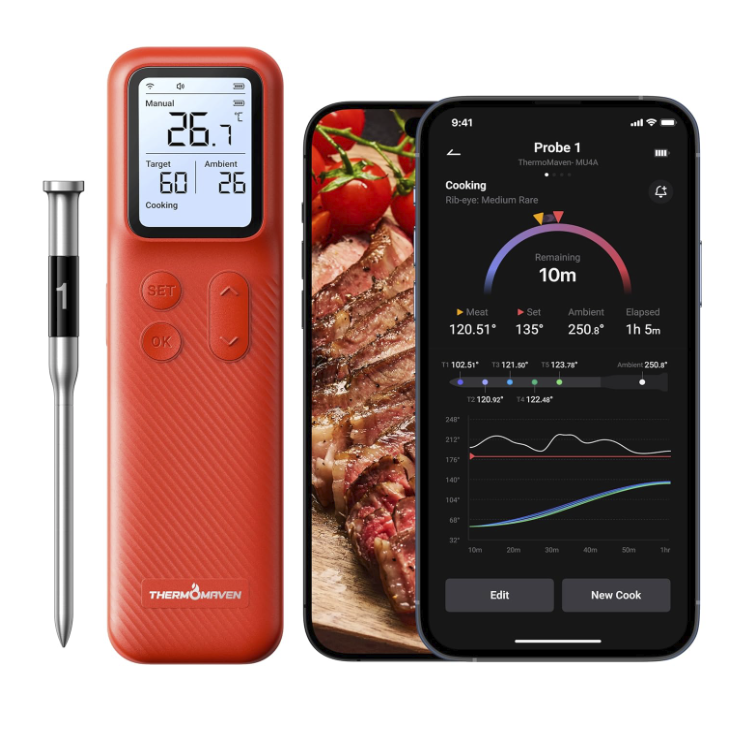
Crew Tech Pick
Wireless Smart Meat Probe
This is the big one for Lesson 02. Covered cooking can make food look finished before the centre is properly there, especially with chicken thighs, pork, thick bakes and loaded trays. A wireless probe takes the guesswork out and lets you watch the cook from your phone like a proper kitchen tech nerd.
The app-style setup is especially useful when you are cooking thicker meat covered first, then finishing uncovered for colour. You can track the inside while the outside gets the treatment.
Grab Yours On Amazon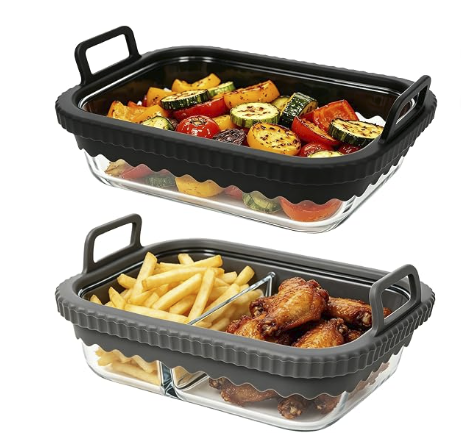
The Crew Uses
Glass Baking Dish
Best for creamy bakes, pasta pots, desserts, vegetable trays and dishes that need steady heat. Glass holds heat well and does not flex when you lift a heavy saucy dinner out of the fryer.
Grab Yours On AmazonCovered Cooking Safety
Do not seal foil so tightly that steam has nowhere to go. You are not trying to build pressure. You are creating a loose shield.
Do not let foil flap up toward the heating element. Shape it around the tray, tuck the edges down and make sure the food or dish is holding it in place.
Do not use plastic lids unless the product specifically says they are oven-safe at the temperature you are using. Plenty of storage lids are for storage, not cooking. Melted plastic is not seasoning.
When using glass, make sure it is oven-safe and fits without touching the drawer sides or heating element. Leave room for air to move around it.
If the food looks finished but you are not sure the middle is hot, do not guess. Check it. Covered cooking can hide what is happening underneath. A meat probe is boring right up until it saves dinner, saves chicken, and saves you from serving a beautiful golden tray with a cold middle.
Key Takeaway
Covered cooking protects.
Uncovered cooking crisps.
Covered first, uncovered at the end gives you both.
That is the difference between air-fryer food that looks cooked and air-fryer food that actually eats properly.